I Finally Finished My Novel After Putting My Phone on the Pad
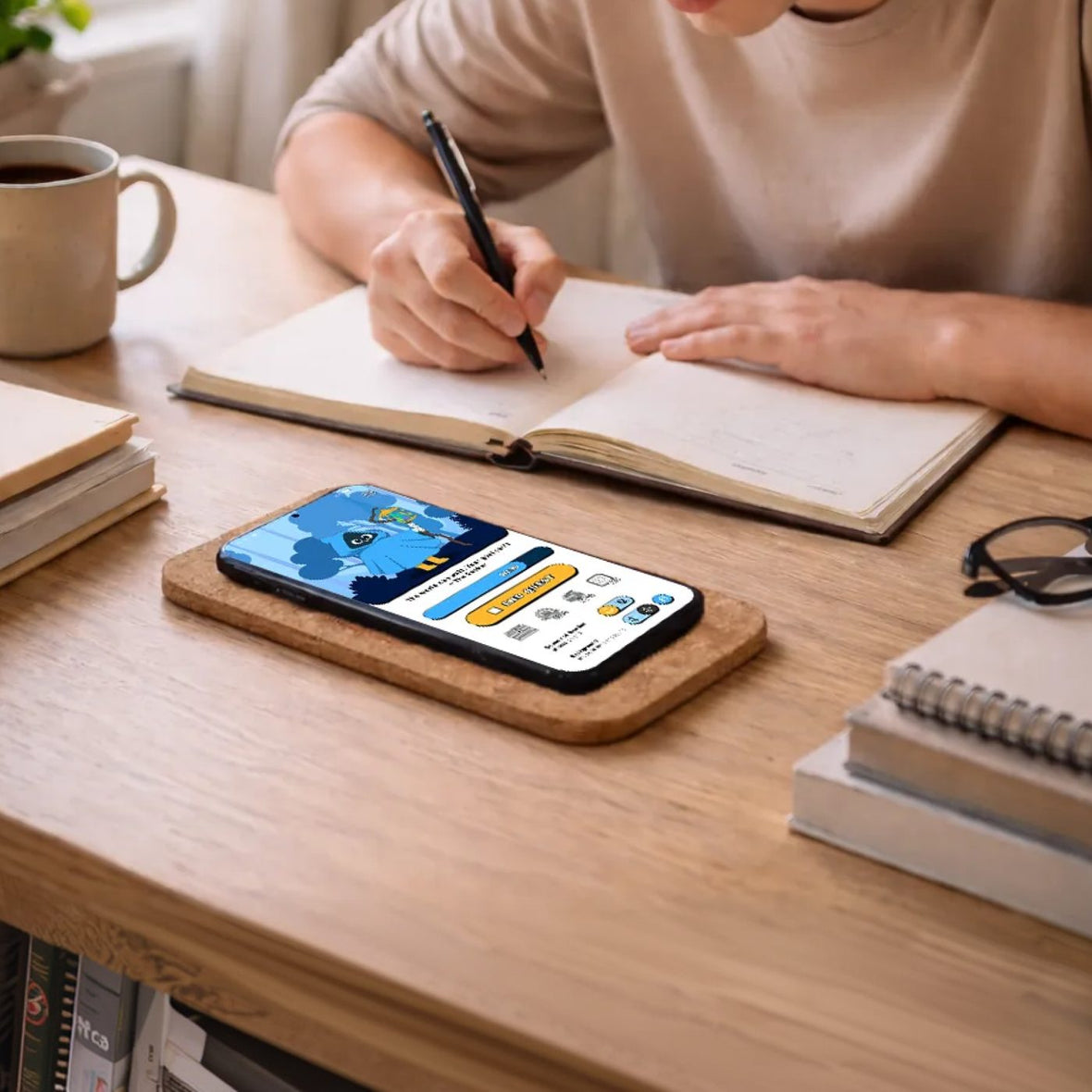
Julien, 41, accountant and aspiring novelist from Lyon
I have wanted to write a novel since I was nineteen. I had notebooks full of ideas. I had outlines, character sketches, research folders. I had the first three chapters written and rewritten half a dozen times. What I did not have was a finished book. For twenty-two years.
The reason was embarrassingly simple. Every time I sat down to write, I picked up my phone instead.
The Creative Block That Was Not a Block
I told everyone I had writer's block. I told myself I was waiting for inspiration. But the truth was uglier than that. I was not blocked. I was distracted. Every writing session followed the same pattern: open the document, write a sentence, feel uncertain, pick up the phone for "just a second," lose thirty minutes, feel guilty, close the document.
The phone was not just stealing my time. It was stealing my creative momentum. Writing requires a particular mental state — a kind of focused daydreaming — that shatters the moment you switch to scrolling. And once shattered, it takes a long time to rebuild.
What I Tried
I tried writing at cafes, at libraries, at 5 AM before work. The venue changed. The phone behavior did not. I tried the Write or Die app that deletes your text if you stop writing. Too stressful. I tried dictating on my phone, but then I was using the distraction device as the creative tool, which ended exactly how you would expect.
I tried NaNoWriMo twice. Both times I burned out by week two because I spent more time avoiding writing than actually writing.
The Pad on My Writing Desk
My wife bought me Humanodoro for Christmas. She knew about my writing dream and she knew about my phone problem. She had seen me sit at my desk for two hours and produce nothing. The gift was gentle but the message was clear: try something different.
I set up the pad on my writing desk. Every Saturday and Sunday morning at 7 AM, I placed my phone on it and opened my manuscript. The rule was simple: the phone stays on the pad until I have written for at least one hour.
What Happened Next
The first session I wrote 800 words. In one hour. That was more than I had written in the previous three months combined. Without the phone, my brain had nowhere to escape. The uncertainty that normally drove me to scroll instead had to be processed. And when I pushed through it, the words came.
I started writing every day. Just one hour. Phone on the pad, document open, words flowing. Some days it was difficult. Most days it was not. The key was that the phone was not an option.
The Book Is Done
Seven months later, I finished my novel. Eighty-three thousand words. Twenty-two years of dreaming and seven months of actually doing. The difference was not talent, inspiration, or time. It was the absence of a rectangle of glass in my hand.
I cried when I typed the last sentence. Not because the ending was sad. Because I finally did the thing I had been telling myself I would do since I was nineteen years old.
What Surprised Me
I always thought I needed large blocks of time to write. I did not. I needed small blocks of undistracted time. One focused hour was worth more than four distracted ones. The quantity of time was never the problem. The quality was.
My Advice
If you have a creative dream collecting dust, a side project that never moves forward, a skill you keep meaning to develop — look at where your free time actually goes. If the answer is your phone, you do not have a motivation problem. You have a distraction problem. Solve the distraction and the creativity will follow. It did for me. After twenty-two years.