Are Phones Ruining Our Relationships?
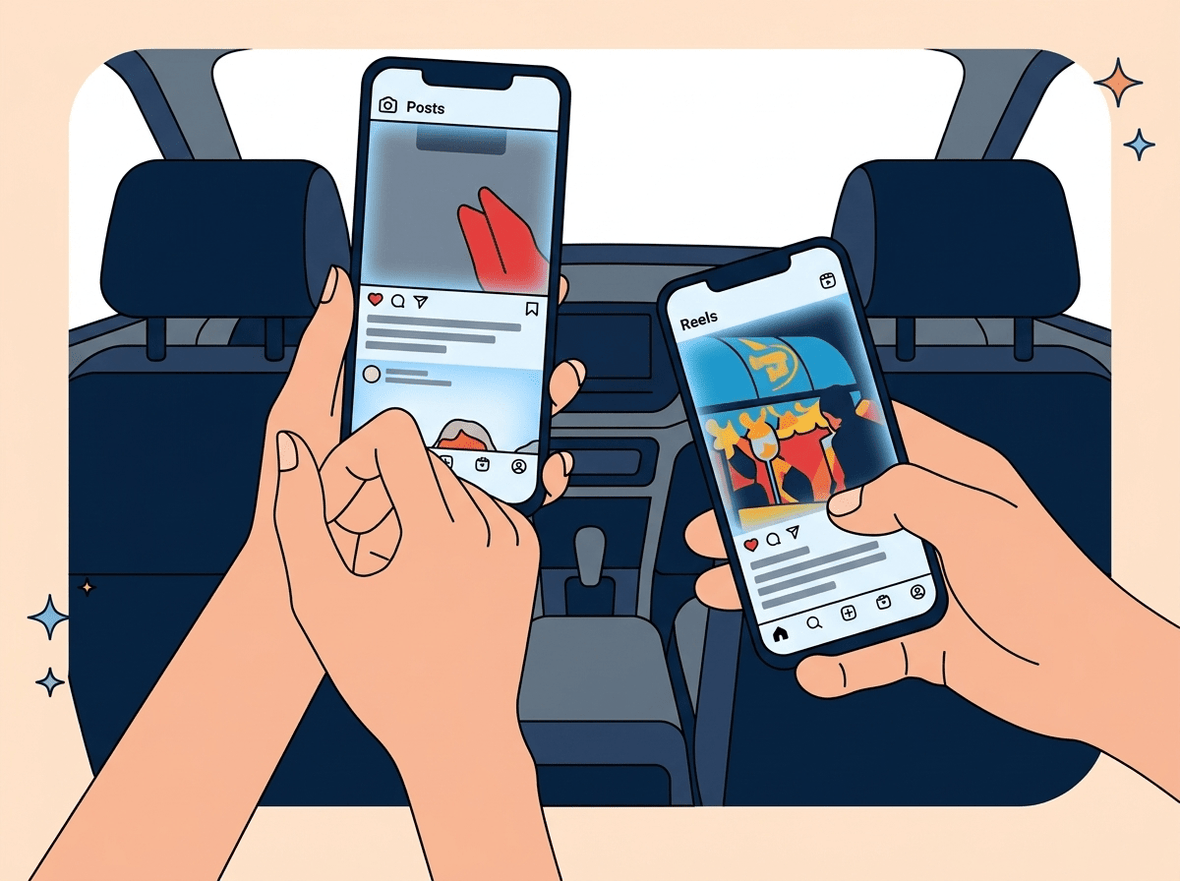
Most people wouldn’t say their phone is more important than their partner, friends, or family. And yet, in everyday moments, it often ends up taking priority — quietly, unintentionally, and without much resistance.
A conversation pauses while someone checks a notification. Dinner is interrupted by scrolling. Time together feels fragmented, even though everyone is technically in the same room. Over time, these small moments add up, and many people start to wonder whether phones are changing the quality of their relationships.
The answer isn’t simple, but it’s worth looking at honestly.
It’s not that we don’t care — it’s that attention is fragile
Phones don’t ruin relationships because people suddenly stop caring about each other. They do it by stealing attention in small, socially acceptable ways.
Unlike older distractions, phones are personal, always available, and socially normalized. Checking a message or scrolling for a moment doesn’t feel rude, especially when everyone else is doing the same. But attention is a limited resource. When it’s split repeatedly, connection becomes thinner.
Research on attention and presence shows that even brief interruptions can reduce the sense of being understood or emotionally connected. When someone feels that your attention is divided, the interaction subtly changes — conversations become shallower, eye contact decreases, and moments lose depth.
No argument is needed. The distance just grows quietly.
Why phones affect relationships more than we expect
Phones don’t just distract us from others; they pull us into entirely different emotional worlds. A single scroll can expose you to work stress, bad news, comparison, or emotional stimulation that has nothing to do with the people around you.
When that happens, you may still be physically present but emotionally elsewhere. This is why time together can feel unsatisfying even when no one is overtly “on their phone the whole time.”
It’s also why many couples and families experience tension around phone use without being able to clearly explain why. The issue isn’t usage alone — it’s what phone use replaces: presence, responsiveness, and shared attention.
The problem with phone rules and confrontations
When phone use starts causing frustration, the instinct is often to set rules: no phones at dinner, no phones during conversations, no phones in bed. While well intentioned, these rules frequently lead to resistance, guilt, or quiet rule-breaking.
That’s because rules frame the phone as the enemy and one person as the enforcer. Over time, this dynamic can feel controlling or moralizing, even if everyone agrees phones are a problem.
Most people don’t want to be told to put their phone away. They want it to feel easier not to reach for it in the first place.
Why shared rituals work better than rules
What tends to work better than rules are shared rituals. Rituals aren’t about control; they’re about intention.
A ritual might be as simple as placing phones in one visible spot when sitting down together, or agreeing that certain moments are meant for undivided attention. The key difference is that the behavior is shared, not enforced.
This is where physical solutions become powerful. When there’s a clear place for phones to go, the decision doesn’t need to be negotiated every time. The environment supports the behavior instead of relying on constant self-control.
Making presence visible again
Humanodoro was designed with this exact problem in mind. The Pad gives phones a dedicated place during moments that matter — meals, conversations, shared activities, or evenings together.
Placing a phone on the Pad is a visible signal: this moment is more important than the scroll. No one has to say anything. The choice is clear without being confrontational.
The companion app adds a supportive layer by rewarding time spent off the phone. Instead of feeling like you’re “giving something up,” staying present becomes something that’s acknowledged and reinforced.
Importantly, nothing is locked or forbidden. If someone needs their phone, they take it. The goal isn’t perfection — it’s reducing unconscious habits that chip away at connection.
Phones don’t ruin relationships overnight — they erode them slowly
Very few relationships end because of phone use alone. What happens instead is more subtle. Conversations feel shorter. Shared moments feel less meaningful. People feel less seen.
The good news is that small changes can reverse this pattern. You don’t need a digital detox or strict bans. You need moments where attention is protected and presence is easy.
Sometimes, all it takes is putting the phone somewhere else.
A small change that creates better moments
If phones have been creeping into the spaces where connection matters most, it doesn’t mean your relationship is broken. It means your attention is under constant pressure.
Creating a shared place for phones, supported by a gentle reward system, can help shift the balance back toward the people in front of you. Humanodoro isn’t about rejecting technology — it’s about choosing when it belongs in the room and when it doesn’t.
If you’re curious what more present time together could feel like, you can explore the Humanodoro Pad in our store and see how a simple ritual might change the way you connect. Sometimes, the smallest boundaries make the biggest difference.